
As companies grow, financial complexity increases quickly.
Hiring decisions affect cash flow.
Sales forecasts influence operational planning.
Capital allocation choices shape the company’s long-term trajectory.
Yet many leadership teams are still managing finance with the same informal processes they used when the company was much smaller.
The result is predictable: surprises, misalignment, and reactive decision-making.
The companies that scale successfully typically operate differently. They build a finance operating rhythm — a structured cadence that connects financial insight to leadership decisions.
Instead of reviewing numbers after the fact, leadership teams use finance as a forward-looking management system.

What Is a Finance Operating Rhythm?
A finance operating rhythm is the structured cadence a leadership team uses to review financial data, update forecasts, and make key decisions.
Rather than relying on occasional financial reviews, the company operates inside a predictable cycle of:
- reviewing key metrics
- evaluating financial performance
- updating forward-looking forecasts
- aligning operational decisions with financial reality
This rhythm turns finance into a management discipline, not just a reporting function.
Companies without a financial operating rhythm often experience:
- financial surprises late in the quarter
- leadership teams operating from different assumptions
- delayed decisions around hiring or investment
- reactive responses to cash flow pressure
In most cases, the issue is not a lack of financial data. It is a lack of structured financial leadership.
Why Financial Rhythm Matters More as Companies Grow
In the early stages of a company, financial decisions often happen quickly and informally.
A founder may review the bank balance, check a few key metrics, and make decisions based largely on instinct.
As revenue grows, that approach becomes increasingly risky.
At $5M, $10M, or $25M in revenue, the organization typically includes:
- multiple department leaders
- more complex hiring plans
- larger operational investments
- greater exposure to cash flow pressure
Without a consistent financial rhythm, these moving parts begin to drift out of alignment.
A strong finance cadence ensures that leadership teams are operating from the same financial picture as the business evolves.
The Four Layers of a Scalable Finance Operating Rhythm
High-performing companies typically build their financial rhythm across four levels of review. Each layer serves a different purpose in helping leadership teams manage growth.
1. Weekly Financial Leadership Review
Weekly reviews focus on short-term visibility and emerging signals.
These conversations are not about deep financial analysis. They are about identifying early indicators that require attention.
Typical discussion topics include:
- current cash position and near-term outlook
- revenue trends and sales pipeline movement
- operational KPIs tied to financial performance
- hiring or spending decisions affecting forecasts
Weekly reviews help leadership teams spot problems early, before they become quarterly issues.
2. Monthly Financial Performance Review
Monthly reviews provide a deeper examination of company performance.
This meeting typically includes analysis of:
- revenue versus forecast
- gross margin trends
- operating expense changes
- departmental performance drivers
- working capital and cash flow dynamics
The goal is not simply to review financial statements.
The goal is to understand what changed, why it changed, and what decisions follow from it.
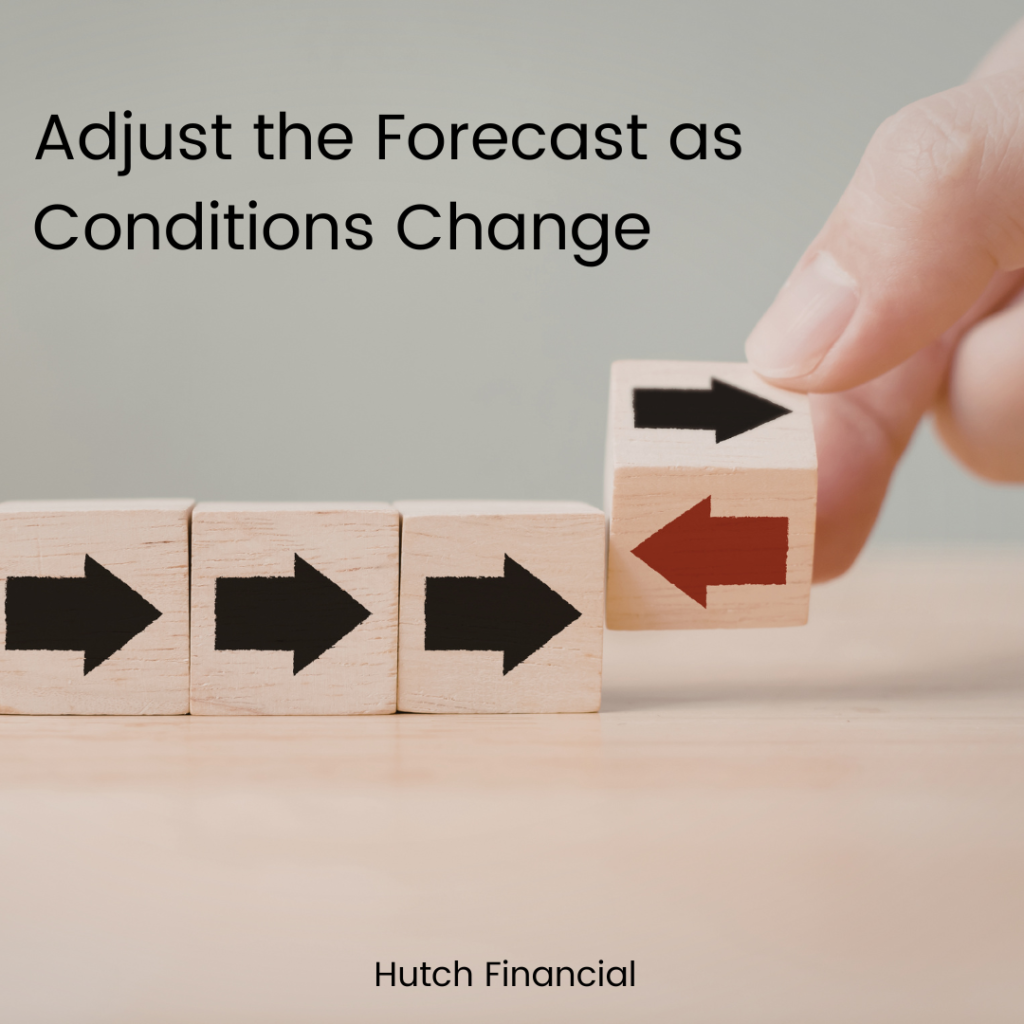
3. Rolling Forecast Updates
One of the most common financial mistakes growing companies make is relying on a static annual budget.
In reality, business conditions rarely stay stable for an entire year.
High-performing companies use rolling forecasts that are updated regularly as new information emerges.
This process often includes adjustments to:
- revenue expectations
- hiring timelines
- operational spending
- capital investment priorities
Rolling forecasts turn finance into a planning tool, not just a reporting tool.
4. Quarterly Strategic Finance Review
Quarterly reviews allow leadership teams to step back and evaluate the broader financial trajectory of the company.
These discussions often focus on:
- growth investment priorities
- pricing strategy adjustments
- margin improvement opportunities
- capital requirements for future growth
- strategic initiatives that impact long-term financial outcomes
At this level, finance becomes directly connected to company strategy.
The Most Common Mistake Companies Make
Many companies believe their financial challenges stem from a lack of reporting.
In reality, the problem is usually a lack of financial structure.
More reports do not necessarily lead to better decisions.
What matters is having the right financial conversations at the right cadence.
A strong finance operating rhythm ensures that leadership teams:
- review the right numbers
- at the right frequency
- with the right decision-makers in the room
This is where financial insight begins to translate into strategic clarity.
Signs Your Finance Rhythm Needs Improvement
If a company lacks a structured financial cadence, certain patterns often appear.
Leadership teams may notice:
- financial discussions happening only once per quarter
- forecasts that rarely get updated
- budget reviews that occur only during annual planning
- operational decisions being made before financial implications are fully understood
These issues are rarely accounting problems.
They are operating system problems within the leadership team.
Finance as a Leadership Discipline
When finance is treated solely as an accounting function, companies often end up reacting to historical numbers after decisions have already been made.
But when finance operates as a leadership discipline, it becomes one of the most valuable tools a company has for navigating growth.
A well-designed finance operating rhythm allows leadership teams to:
- anticipate risks earlier
- allocate capital more intentionally
- maintain alignment across departments
- make strategic decisions with greater confidence
Growth inevitably introduces complexity.
The companies that scale successfully are rarely the ones with the most sophisticated spreadsheets.
They are the ones with the clearest financial operating rhythm guiding their decisions.

For many leadership teams, the challenge isn’t access to financial data. It’s creating the structure that allows the right insights to surface at the right time.
As companies grow, the role of finance naturally shifts from reporting what happened to helping leadership decide what should happen next.
Building that structure — the cadence, conversations, and decision frameworks behind finance — is often what allows companies to move from reactive financial management to intentional financial leadership.
At Hutch Financial, we work with leadership teams to design financial systems and operating rhythms that support smarter decisions as companies scale. If you’re thinking about how to strengthen financial visibility, forecasting, or decision-making within your organization, we’d love the opportunity to connect and explore how the right financial structure can support your next stage of growth.